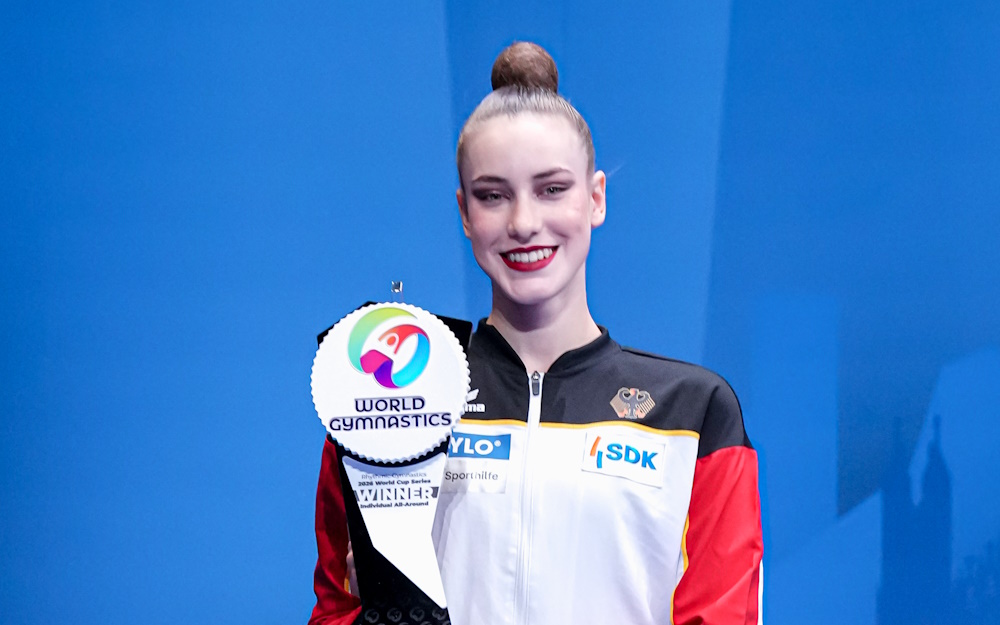
Frankfurt 2026: Darja Varfolomeev Walks Into a World Championship She's Already Half-Won
Four of five World Cup individual trophies in 2026. That's the number that should frighten everyone else on the entry list for the 42nd Rhythmic Gymnastics World Championships. Darja Varfolomeev isn't arriving at the Festhalle Frankfurt as a hopeful — she's arriving as the Olympic champion, the reigning 2025 world all-around champion, and a gymnast who has spent the entire World Cup season methodically collecting silverware. Germany is hosting. Germany also happens to own the best individual gymnast in the discipline. That is not a coincidence anyone in the sport is pretending to ignore.
The home team is stacked, and that changes the maths
Host nations usually lean on the crowd for a point or two. Germany doesn't need to. Beyond Varfolomeev, the definitive registrations confirm Margarita Kolosov — fourth at the Paris 2024 Olympics, a placing that stung precisely because it was so close to a medal — and Anastasia Simakova, who took European silver and world bronze in 2025. That's three genuine all-around contenders under one flag. Add the German group, entered as 2025 European bronze medallists, and you have a home federation that could plausibly reach the podium in every discipline on offer.
Nine medal events are up for grabs: the senior individual all-around, four apparatus finals in hoop, ball, clubs and ribbon, the group all-around, two group apparatus finals — 5 balls, and the mixed 3 hoops + 4 clubs — plus the team event. Roughly 300 athletes are confirmed. The apparatus, for the technically minded, comes from Spieth.
Where the real fight is
The all-around title looks like Varfolomeev's to lose. The apparatus finals are where the championship gets interesting, because a single dropped club or a ribbon knot can hand a specialist the medal a favourite left on the table. This is the format that rewards nerve over reputation. Kolosov and Simakova will both be gunning for individual apparatus hardware, and an internal German scrap for those finals could be the most compelling storyline of the week — teammates who train together, drawn against each other with a world title on the line.
The group competition is quietly the more open contest. A European bronze puts Germany in the conversation without making them favourites, and group work at this level is decided by fractions of a tenth in synchronisation and exchange difficulty.
What this championship actually decides
Frankfurt 2026 is the first world championships of the post-Paris cycle where Varfolomeev is no longer chasing anyone — she's the target. That flips the pressure. The question isn't whether she's good enough; it's whether anyone has built a routine difficult enough to punish the one bad day even champions have. If Germany sweeps its own home floor, this becomes the meet that confirms a genuine dynasty. If a specialist steals an apparatus final in front of a partisan crowd, that upset will echo far louder than the all-around result everyone already expects. Either way, the sport walks out of the Festhalle knowing exactly where the ceiling sits — and whose name is written on it.